Hellenistic city of Petres
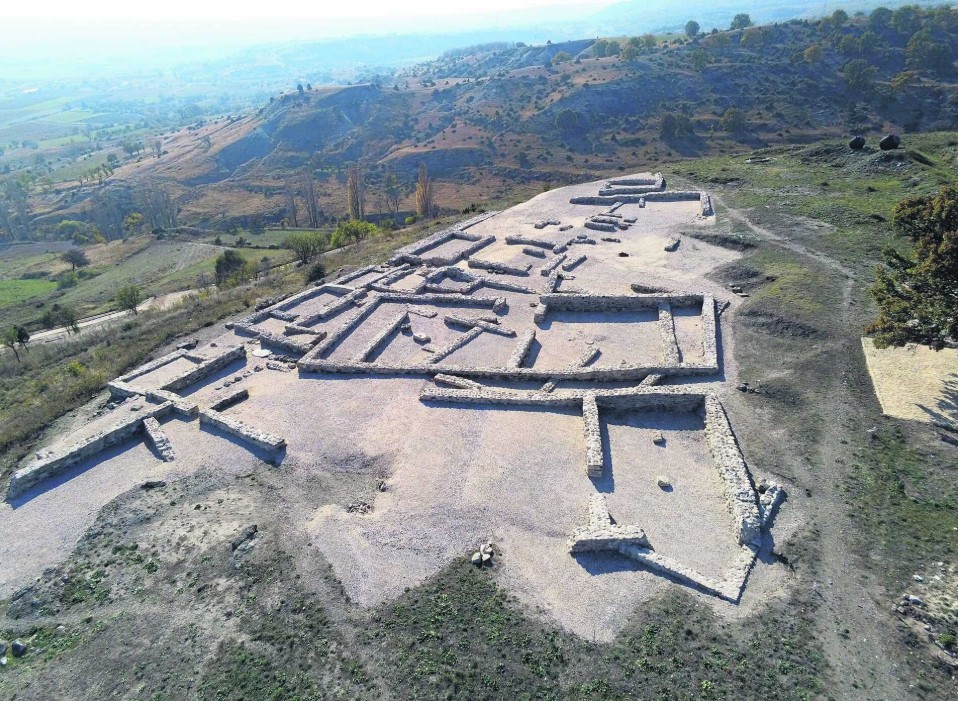
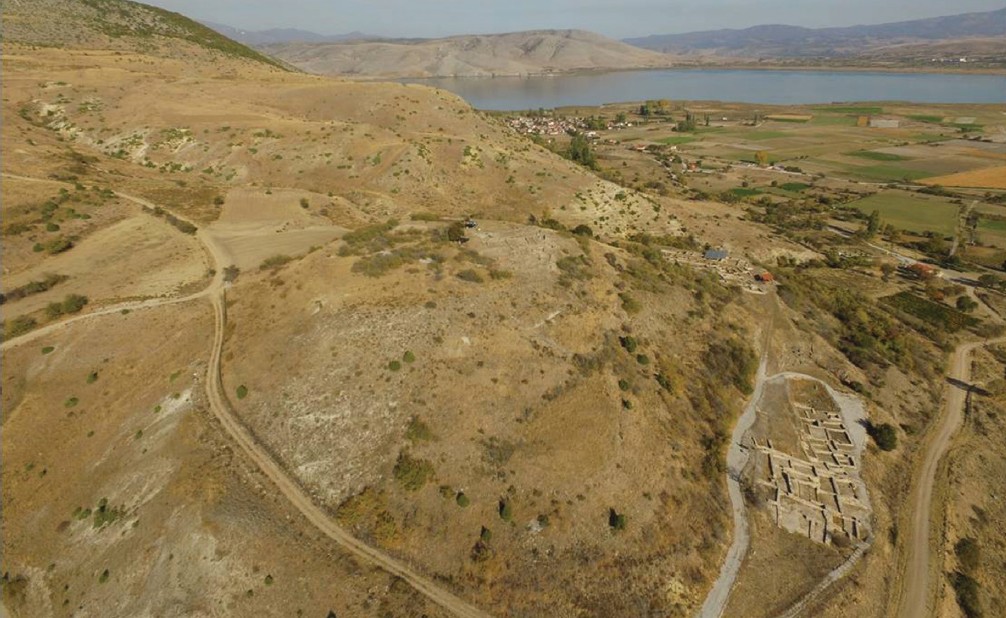
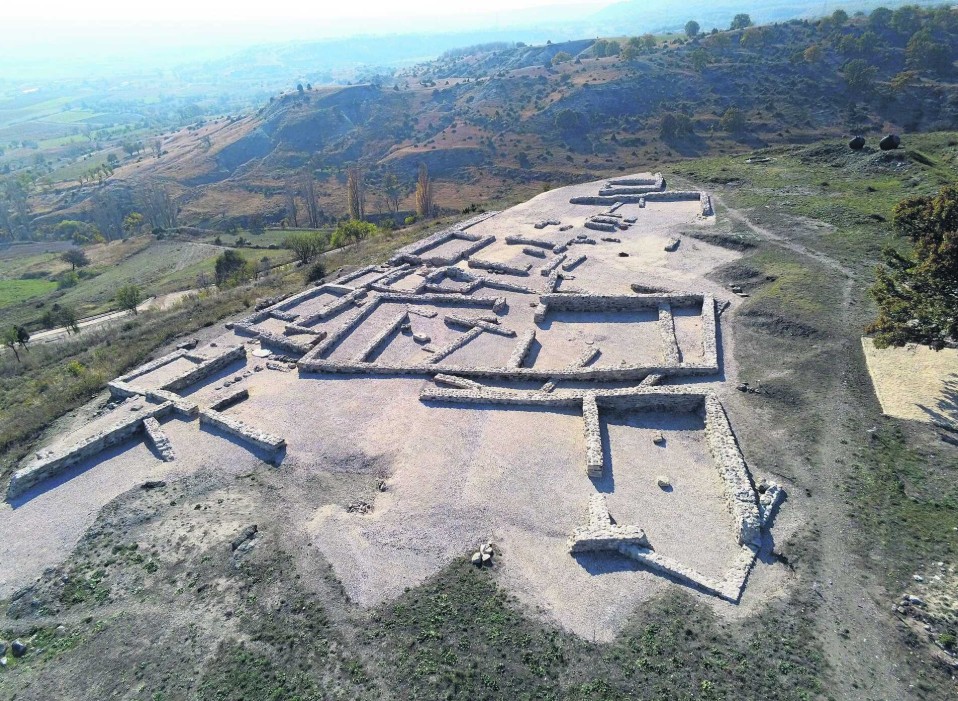
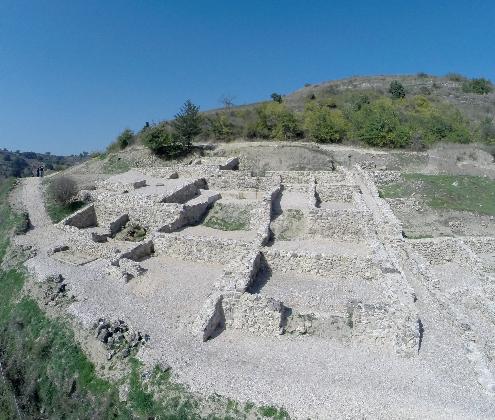
The ruins of the Hellenistic city are located at the site known as “Gradista,” 1.5 km northwest of the present-day village, and cover an area of 15–20 hectares. The site has been known since the early 20th century, when, in 1913, Nikolaos Papadakis recorded and published the inscriptions embedded in the walls of the Church of Saint Nicholas, which originated from the settlement. Twenty years later, Professor Antonios Keramopoulos confirmed the existence of building foundations following the limited excavation he conducted. Systematic research on the settlement began in 1982 by the 17th Ephorate of Prehistoric and Classical Antiquities, while in recent years significant restoration and promotion projects have been carried out on the settlement’s remains, making the Hellenistic city of Petres an organised and attractive archaeological site.
The earliest evidence of habitation at the site dates back to the Early Iron Age, based on pottery that has been sporadically found. The settlement was founded on this specific hill due to the strategic advantages of its geographical location, most likely by Philip II during the 4th century BC The heyday of the settlement—a typical example of an Upper Macedonian small town (komē) with an agrarian-pastoral economy—is dated to the period between the 3rd and 1st centuries BC.
Archaeological excavations have so far brought to light a sturdy wall enclosing the settlement, which is laid out in a free-form urban plan that makes the best use of the hill’s contours. According to experts’ estimates, the population of this densely populated town was around 5,000 residents.
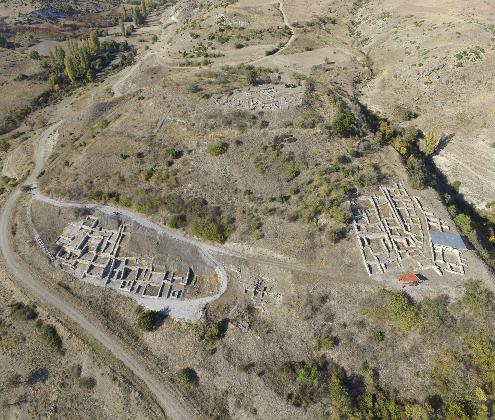
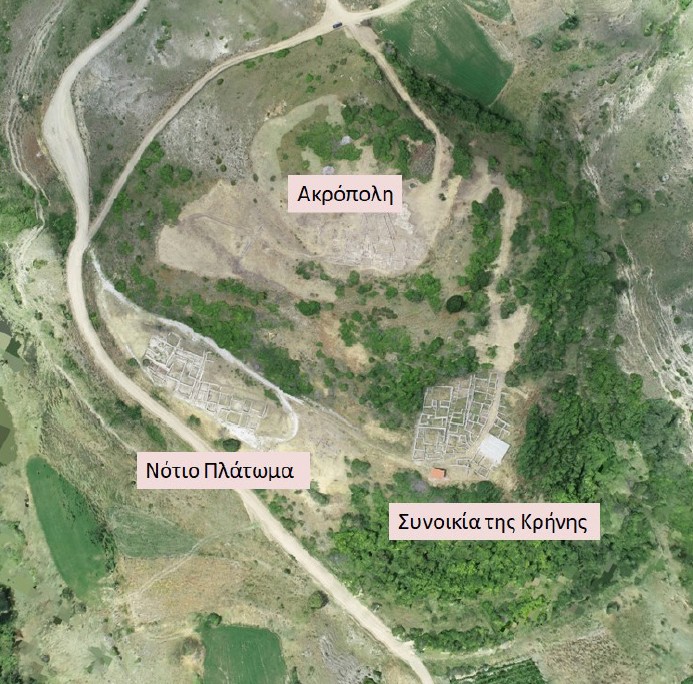
Architectural remains of the city have been identified in three areas: the so-called “Neighbourhood of the Fountain,” the Southern Plateau, and the acropolis plateau at the top of the hill.
A distinctive feature of the city’s urban layout, as evidenced in the “Neighbourhood of the Fountain,” is the system of streets that crisscrossed the settlement, with the widest reaching three meters in width and following the contours of the hill. Luxurious residences as well as important public buildings have been identified in this area. The most significant of these was the nearly square structure with an altar at its centre, which served as a sanctuary of Zeus, according to an inscription found inside it. To the east of the sanctuary, a large structure and an oven for processing grain were discovered, while on the adjacent residential islet, a large underground pitheon, a storage room containing seventeen large pithoi, which served as a public granary. In the same area, beneath the pavement of the main street, ran a circular clay water pipe that terminated at a monumentally designed fountain.
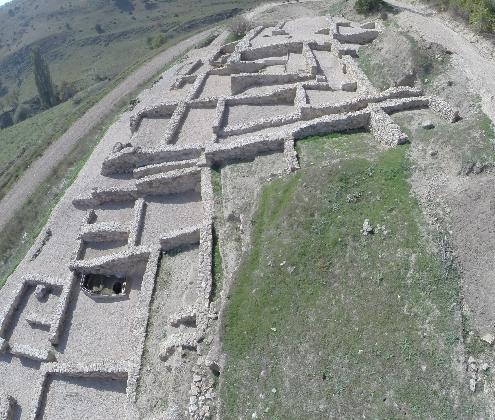
Significant evidence regarding the layout, form, and functions of the city’s dwellings has emerged from the “Neighbourhood of the Fountain”, but primarily from the South Plateau area. The houses are arranged in groups of three, sharing exterior walls. These are generally two-story structures without a courtyard, with a usable area of 180–200 square meters. The ground floors, constructed of pebble masonry, were used as storage areas with jars and as workshops with ovens for food preparation. The upper floors were constructed of lighter materials and timber framing, while the interior walls were decorated with coloured plaster. The rear section of the upper floor had direct access from the street, which may indicate that it served as the men’s quarters, while the women’s quarters were located in the front section of the upper floor. The large opening on the ground floor and the presence of a staircase likely indicate the existence of a semi-open space for lighting and ventilation.
On the plateau at the top of the hill where the city was built, its acropolis was located, which may have been enclosed by a wall. The earliest evidence of habitation from the Iron Age has also been found here. The main phases of occupation of the area begin in the second half of the 4th century BC and extend to the mid-1st century BC, a period during which the city was destroyed in the course of the Roman Civil War. A key piece of evidence for dating the city’s destruction is a clay vessel that was found, inside which was a hoard of 125 silver coins (denarii) dating from between 106 and 42 BC.
Among the fragmentary architectural remains of buildings from various phases of the acropolis’s use, two large rectangular buildings stand out: Building A and Building B, with a street running between them. No architectural elements were identified to the north of these two buildings, suggesting that there was an open space there—a “square.”
During the 2021 excavations, in the narrow rear area of Building A, a rectangular inscribed stone stele was discovered, dedicated to Heracles Kynagidas as a “votive offering” for the liberation of the slave Paramona from Davreia. The inscription, combined with the building’s architectural form and large dimensions, makes it highly likely that the building served as a sanctuary of Heracles Kynagidas. Furthermore, a fragment of a marble statuette was found in Building B, depicting a hand holding a thunderbolt—most likely a representation of the god Zeus. Therefore, it is considered quite likely that there were two religious buildings, located in close proximity to an open public space on the acropolis of the settlement.
The settlement exhibits wealth and a high standard of living, a fact attributable to its confirmed commercial and cultural contacts with cities in Central and Eastern Macedonia, as well as with the West. The abundance of agricultural tools attests to the residents’ agricultural activities, with tools related to viticulture being particularly common; this is further evidenced by the quantities of resin used to enrich the flavour of wine that were found near the public warehouse containing the pithoi. Furthermore, the settlement was home to workshops for pottery, metalworking, and most likely sculpture, a fact evidenced by the significant number of clay figurines of deities, as well as corresponding stone sculptures. Among the wide variety of decorated clay vessels, those bearing relief depictions of scenes from Homer’s Iliad, accompanied by explanatory inscriptions, stand out.
The settlement was abandoned in the mid-1st century BC and relocated to the area of the present-day village of Petres. Remains from the Roman period have been found near the village’s football field, and there are also scattered architectural remains and funerary stelae that were occasionally used by the inhabitants as building material.
Recent archaeological research and studies have yielded significant evidence regarding the name of the Hellenistic city of Petres, which had previously been proposed to be identified with the “Kelli” mentioned in Roman written sources. However, the epithets “Vrynaia” and “Vrynaios” associated with the slave Paramona and her master Davreias in the inscription found at the sanctuary of Heracles Kynagidas may suggest that the Hellenistic city of Petres was called Vryna.
Photos