Iron Age Necropolis of Agios Panteleimon
In the vineyard that extends between Lakes Vegoritis and Petron, west of the present-day settlement of Agios Panteleimon, at a site known as Agios Georgios, the extensive cemetery of the Early Iron Age (1100–550 BC) is located. The necropolis was discovered by chance in the late 19th century, during construction work on the Thessaloniki–Monastir (Bitola) railway line. The 1898–1899 excavation by the Russian Archaeological Institute of Constantinople is of particular significance, as it was one of the first excavations of a prehistoric site in the Balkans.
According to the excavation report published by the Russian archaeologists, 376 cist-graves were uncovered, containing either single or multiple burials. Most contained small objects as grave offerings (bronze statuettes, miniature vases, adornments, etc.) and jewellery (fibulae, pins, rings, earrings, bracelets) made of bronze, iron, glass, bone, clay, and, more rarely, gold. Among the pottery, the most notable items are the jugs, single-handled and double-handled cups, as well as certain vessels with matt-painted decoration. Unfortunately, nothing remains in the area from the wealth of finds from this first excavation, as some are housed in the Archaeological Museum of Thessaloniki, some in the Benaki Museum, while the majority of the finds are held in the Archaeological Museum of Istanbul.
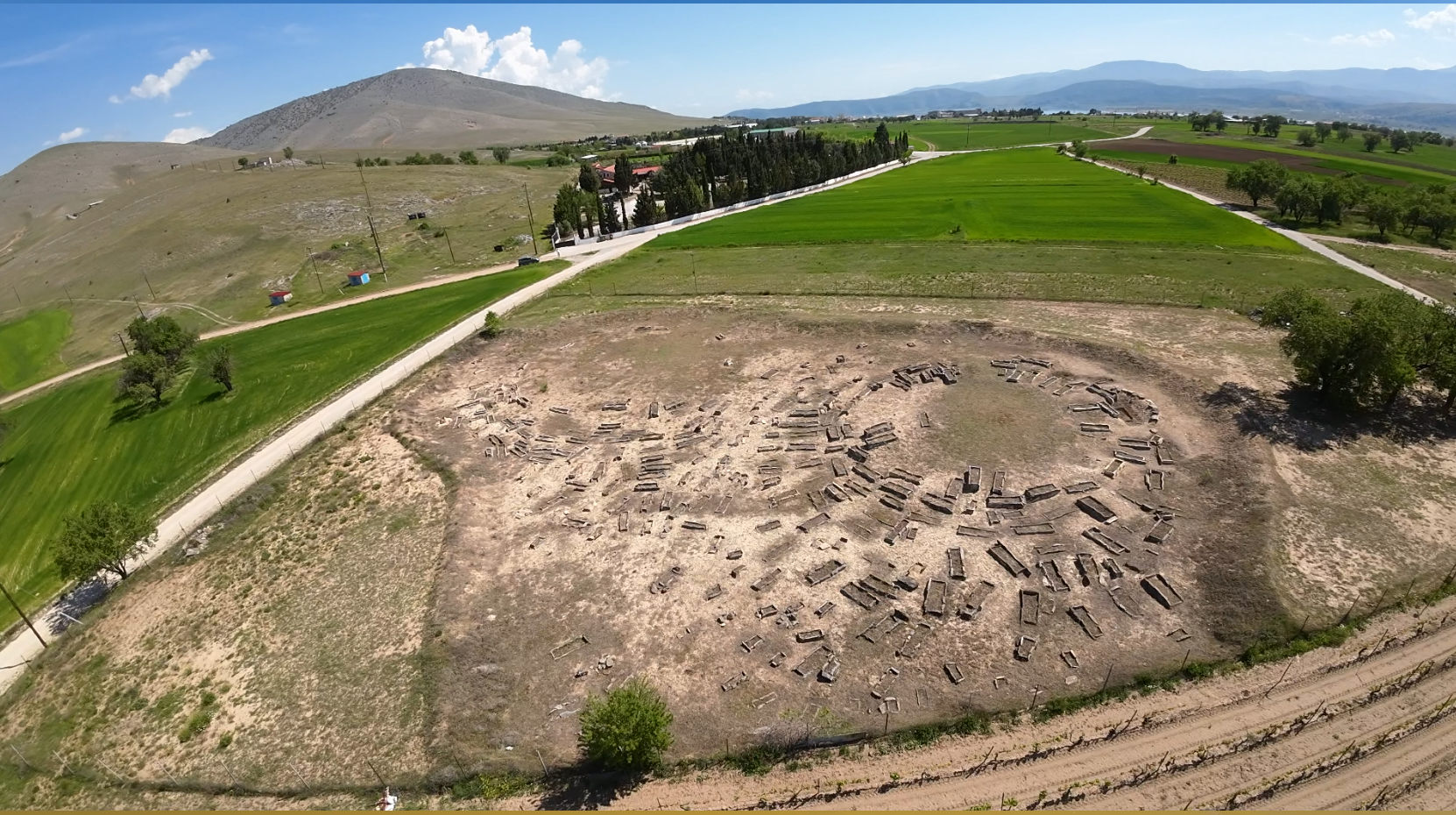
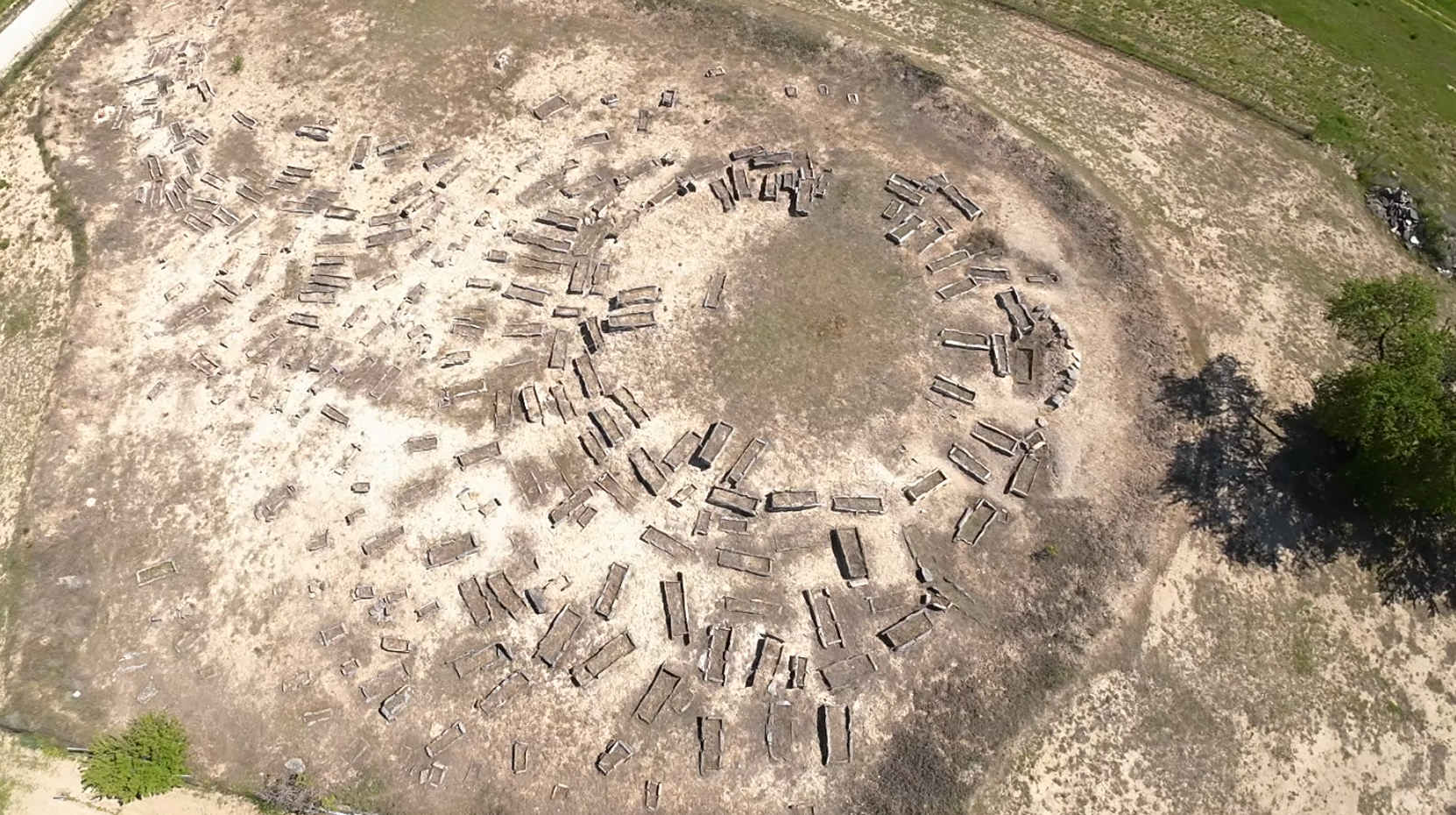
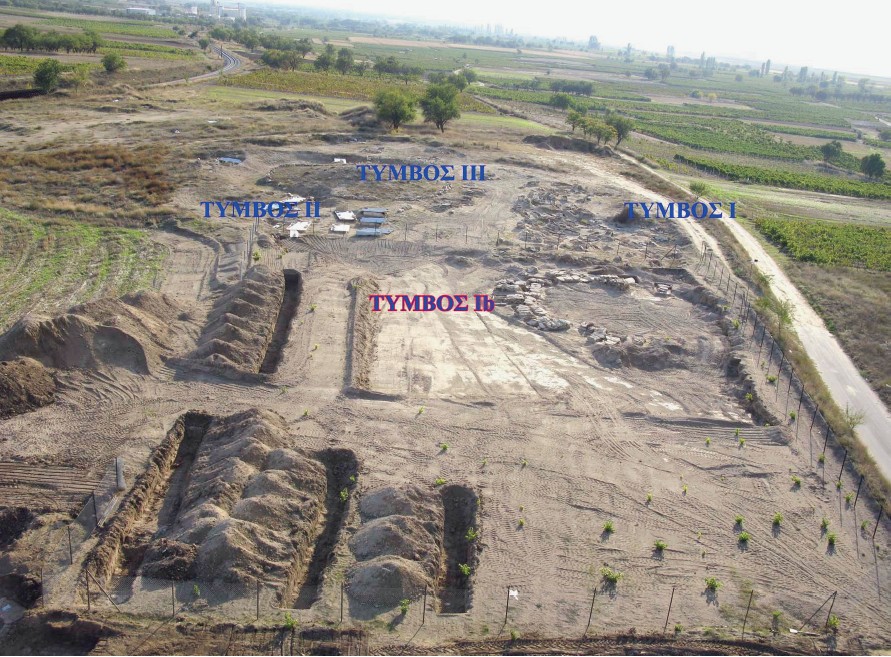
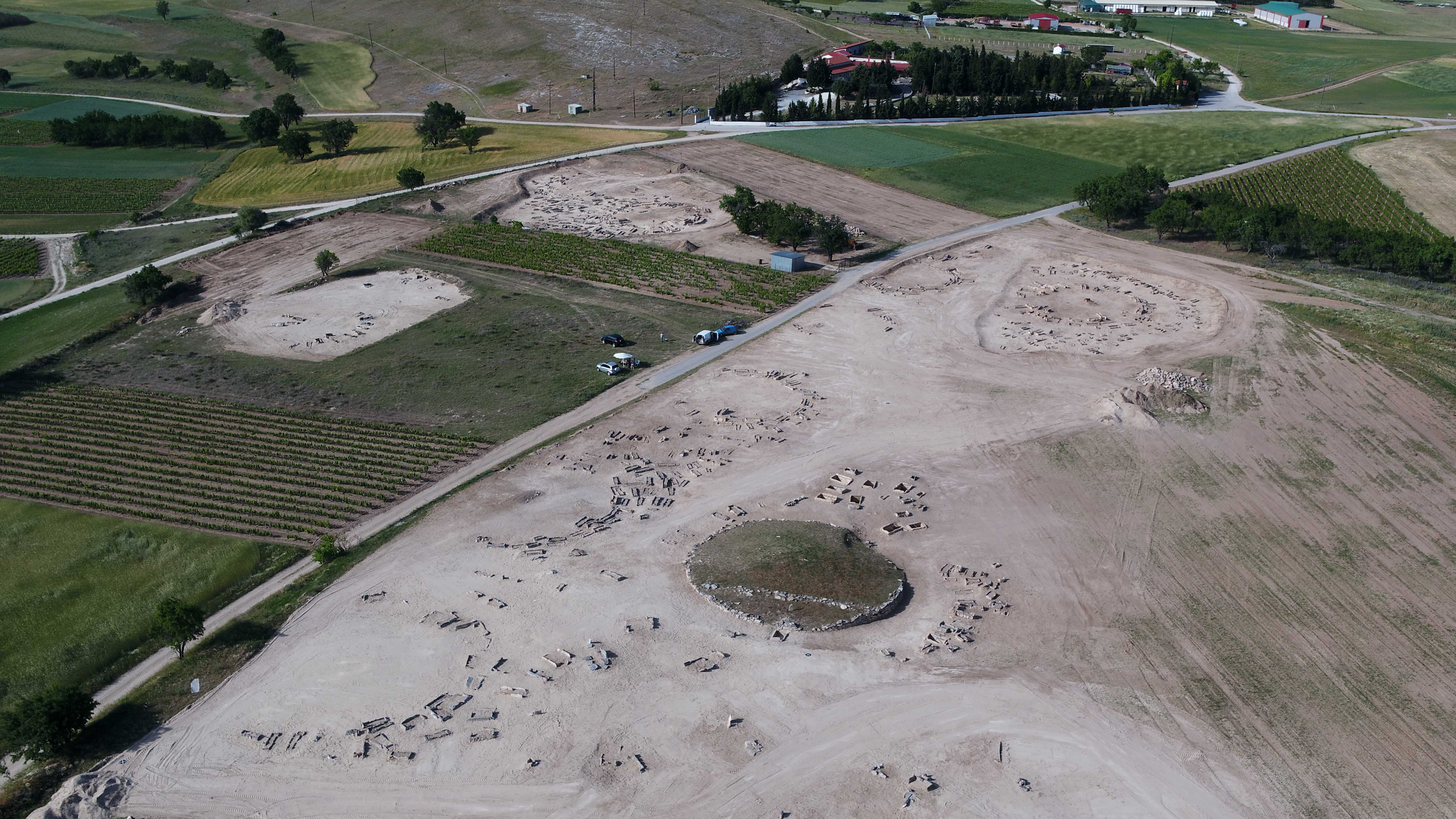
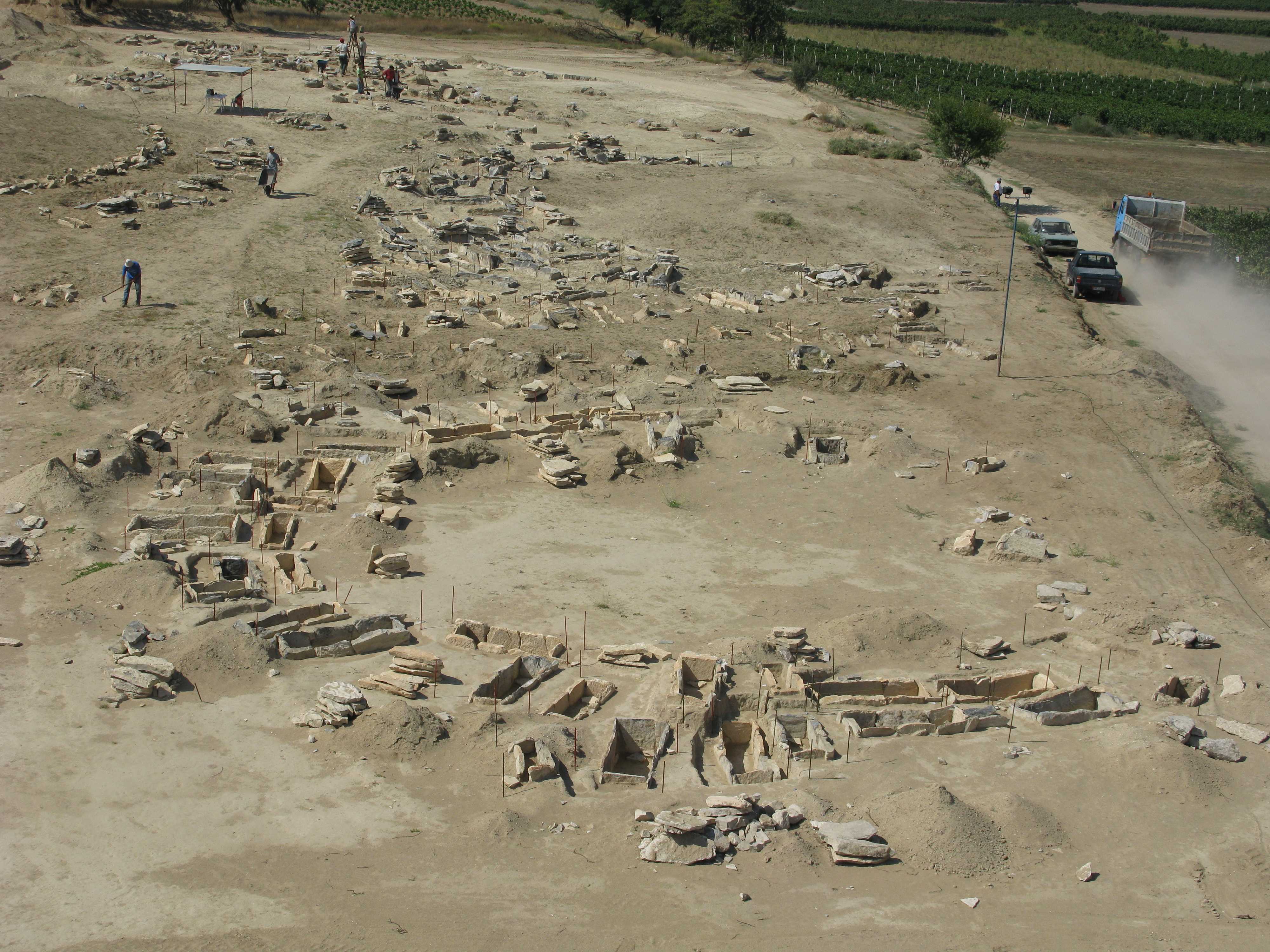
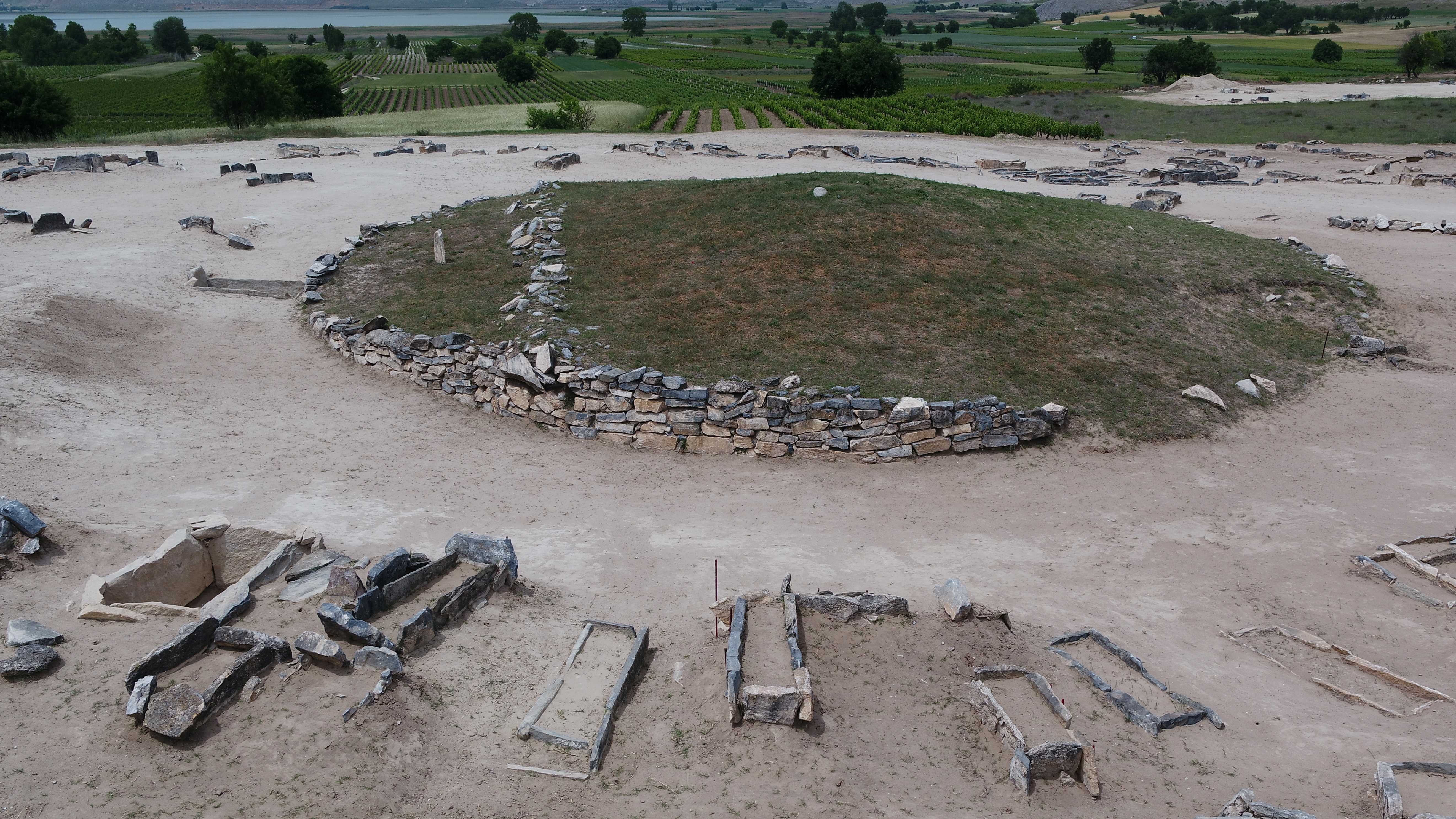
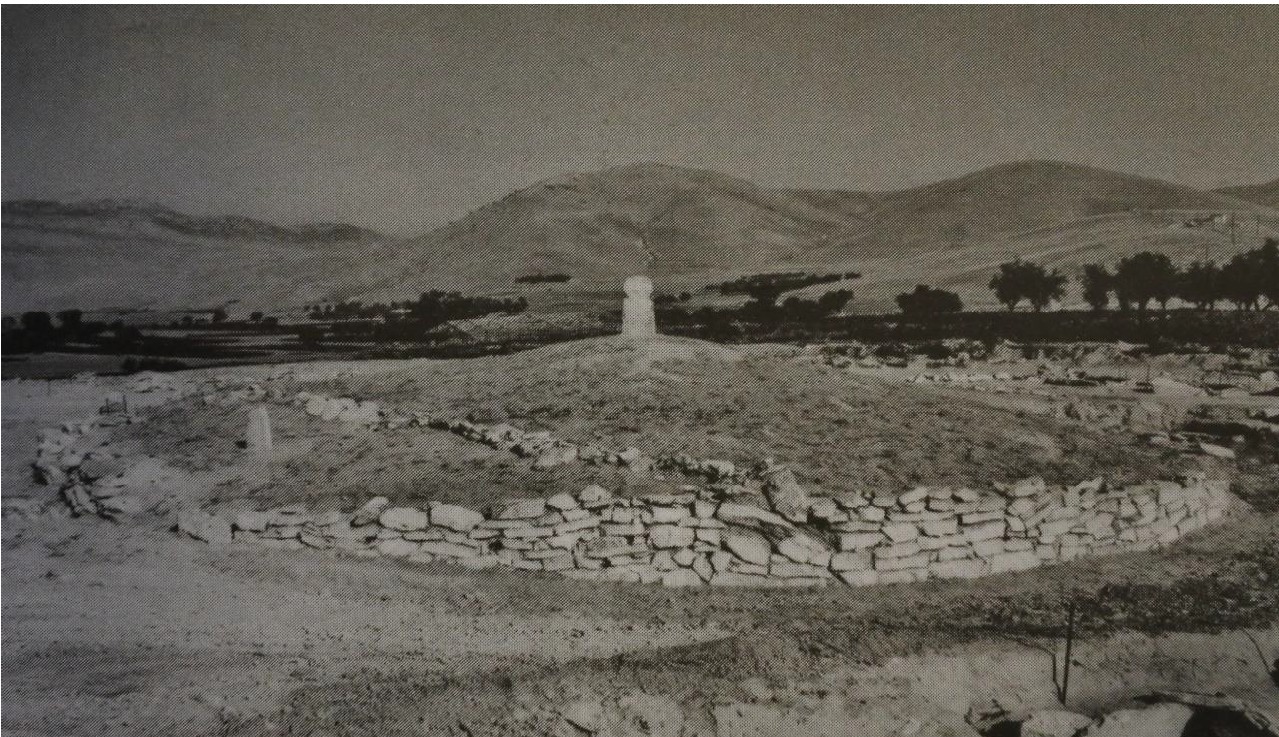
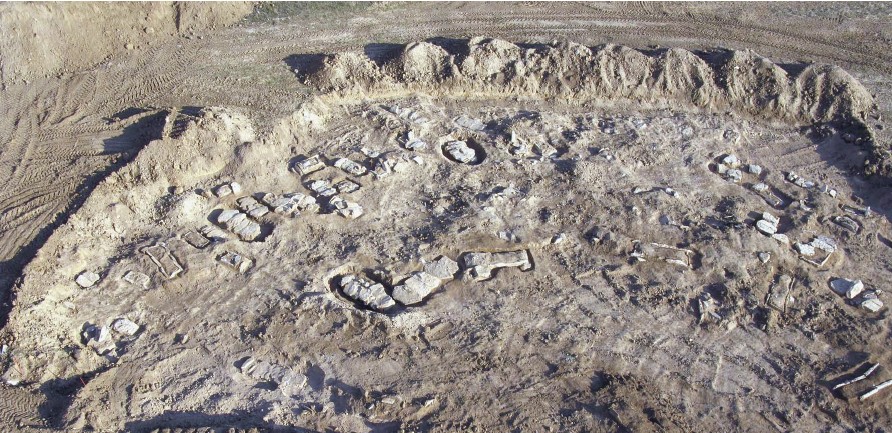
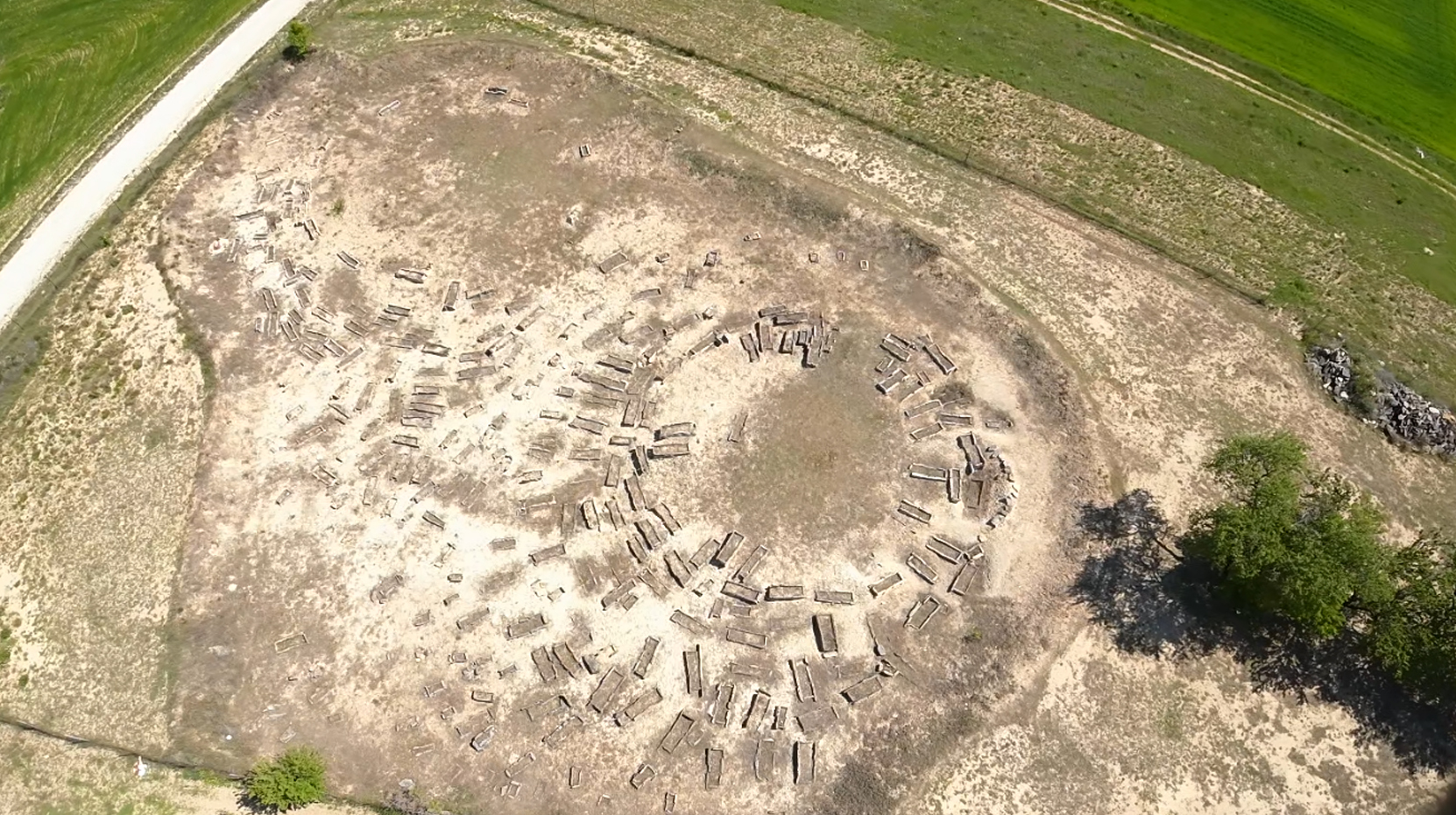
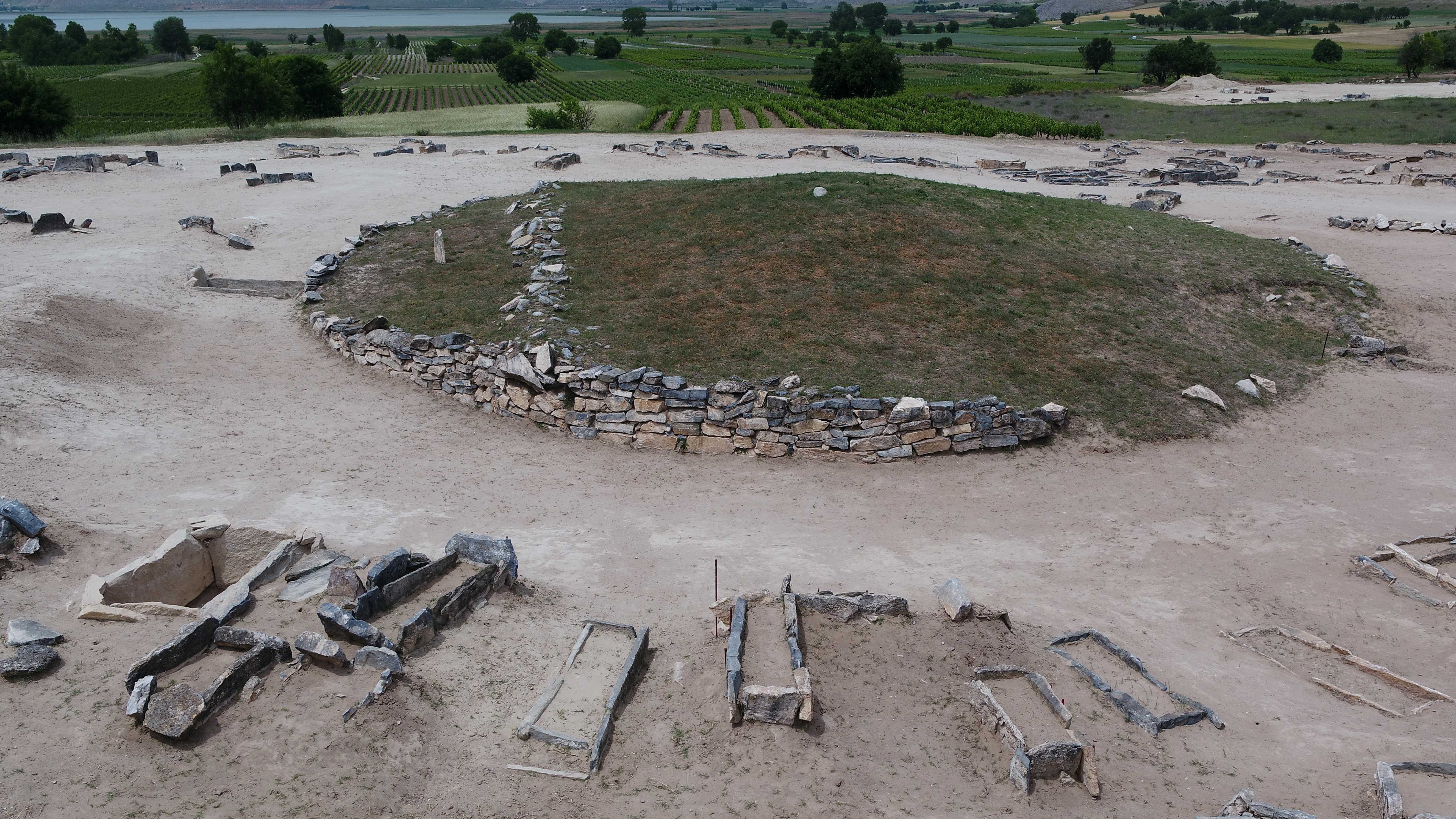
In 2001, the modern phase of archaeological investigation and study of the necropolis began, conducted by the Florina Ephorate of Antiquities. To date, the research has revealed a wealth of new information about the necropolis, primarily regarding its extent, layout, and chronology. According to preliminary excavation reports, the necropolis covers an area of approximately 25 acres and consists of 18 small and larger circular tumuli—that is, clusters of burials—which in many cases were enclosed by a stone surrounding wall and covered with earth. A characteristic feature of the mounds is that a grave containing one or more deceased individuals is situated at their centre, with the remaining burial groups arranged, after a vacant space, in a circular pattern around the perimeter of the mound. The graves, except a few pit-shaped ones, are primarily cist-shaped, with flat stones on their sides and covering them. They rarely contain only one deceased individual, as more than one skeleton (secondary burials) is usually found, carefully arranged within the grave.
The large number of tumuli, the variety of burial practices, and the quantity and quality of the grave goods make the Iron Age necropolis unique in the Balkan region. Despite the damage caused by agricultural activity and past attempts at treasure hunting, the many hundreds of undisturbed graves that have been archaeologically investigated have yielded an exceptionally large number of grave goods made of clay, bronze, iron, stone, and, more rarely, gold and ivory. The main category of finds consists of pottery, with hundreds of intact or fragmentary decorated or coarse vessels of various shapes and sizes, while iron and bronze weapons and tools are also numerous. Jewellery of all types (rings, bracelets, necklaces), ornaments, and accessories for clothing and hairstyles, combined with the excellent preservation of the skeletons, provide important evidence for reconstructing the manner of body adornment, the stylisation of the hair, and the attire of the people of that era. Particularly striking are the frequent burials of women, adorned with diadems and elaborate jewellery, which may indicate the existence of a priesthood or a complex social hierarchy.
The distinctive features and size of the necropolis lead experts to hypothesise that it served as a common burial ground for more than one settlement in the region, which were centres of strategic or commercial importance; archaeological evidence suggests that the nearest of these extended into the area where the modern settlement of Agios Panteleimon is located. As for the organisation of the necropolis into tumuli, it is believed that these correspond to different generations or “clans,” with their prominent members such as “princes or princesses,” “priests or priestesses,” distinguished by objects such as weapons, elaborate diadems, belts, and double axes that reveal their owners’ distinct identity and their position in the social hierarchy.
According to the excavation data, the necropolis began to be used in the 11th century BC and remained in continuous use for at least five centuries before coming to an abrupt end in the early 6th century BC. Experts link this event to Thucydides’ historical account, according to which the Macedonians of Lower Macedonia conquered Eordaia and gradually subjugated the “tribes” of Upper Macedonia in the mid-7th century BC. In fact, the ancient historian reports that the Macedonians exterminated the indigenous inhabitants of Eordaia, with those who survived fleeing to Mygdonia in Central Macedonia.
Photos